
Player Value in Live Casino Gaming: Why Some Players are Crucial for Live Casinos?
 Nathan Williams
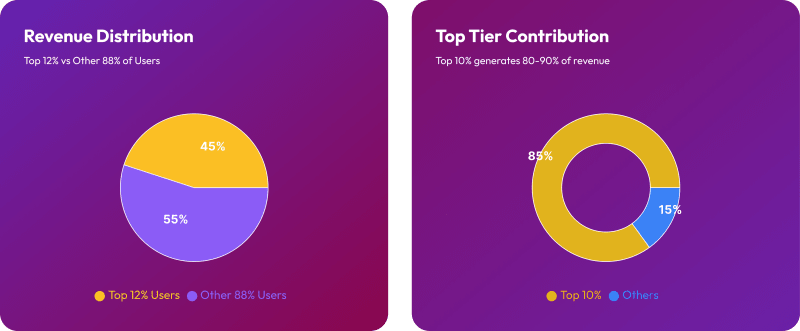
The live casino industry follows a clear pattern: a relatively small group of players contributes a large share of activity. Around 12% of players account for about 45% of all wagers in live games. In VIP segments, this becomes even more concentrated, with the top 10% generating between 80% and 90% of revenue.
Key Takeaways:
- Revenue concentration is notable: 12% of players generate 45% of revenue, while the top 10% in VIP groups account for 80–90%.
- Betting levels vary widely: higher-value players wager 10 to 100 times more per session.
- Growth is steady: live casino revenue reached $8.9 billion, up 25% year over year.
- VIP profile trends: 72% male, average age 42, with 55% earning over $75,000 annually, often choosing baccarat and blackjack.

Revenue Distribution in Live Casinos
How Player Activity Is Spread
Unlike many industries where revenue is spread more evenly, live casinos show a more uneven distribution. A smaller segment of players contributes a larger share of total wagers. Across the broader market, 12% of players generate 45% of revenue. In higher-tier environments, the top 10% can account for up to 90%. This reflects differences in how often people play and how much they choose to wager.
Market Size and Growth
The market itself continues to grow. Live casino gaming generated $16.8 billion in 2023, with live dealer games reaching $8.9 billion. In Europe, these games now make up about a quarter of online casino revenue.
Examples show the scale. Based on Gaming Soft Report we can see that VIP baccarat tables in Macau produced $2.43 billion in one quarter alone. That figure highlights how certain games and regions can contribute significantly over a short period.
Why Live Casinos Focus on Different Player Types
Operational Structure and Costs
This pattern is closely tied to how live casinos operate. Running live games involves fixed costs. Professional live dealers, studios, and streaming systems need to be in place regardless of how many people are playing at a given moment. Because of this, consistent participation at different betting levels helps support operations.
Game Design and Flexibility
Game formats also allow flexibility. Tables often include a wide range of betting limits, so players can choose what suits them. Baccarat and blackjack, in particular, are popular among players who prefer higher limits, but they are also available at lower levels.
Player Habits and Engagement
Player habits play a role as well. Some users return more often, play across multiple devices, and spend longer periods in sessions. Others prefer shorter, occasional play. Both patterns are part of the overall ecosystem. From a business perspective, acquiring different types of players involves different costs and outcomes. Over time, a mix of player groups helps maintain balance.

Differences Between Live Casino Player Groups
Casual Players
Casual players usually wager between $5 and $50 per session. They make up over 70% of the player base but contribute a smaller share of total revenue, around 10% to 15%. Sessions are typically short, often under 30 minutes.
Regular Players
Regular players wager between $50 and $500 and tend to play more frequently. They represent about 18% of players and contribute roughly 30% to 35% of revenue. They often use more than one device and return on a weekly basis.
Higher-Value Players
Higher-value players place larger wagers, sometimes ranging from $500 to several thousand per session. They represent about 10% to 12% of players and contribute a larger share of activity. Many of them play regularly and show consistent engagement across top live casino platforms.

Demographic Patterns
Demographic trends show some common patterns. A majority are male, with an average age of 42, and over half report incomes above $75,000. Game preferences often include baccarat and blackjack, though this varies by region. The difference in activity levels between groups can be large. In some cases, one high-value player may account for the same level of wagering as many casual players combined. Looking ahead, analysts expect steady growth through 2030. The development of live casinos will likely continue to reflect how different players choose to engage, rather than relying on a single type of user. It is a system built on variety. And that variety matters.