
Live Mobile Gambling vs Desktop: Which is Dominating in 2026 ?
 Nathan Williams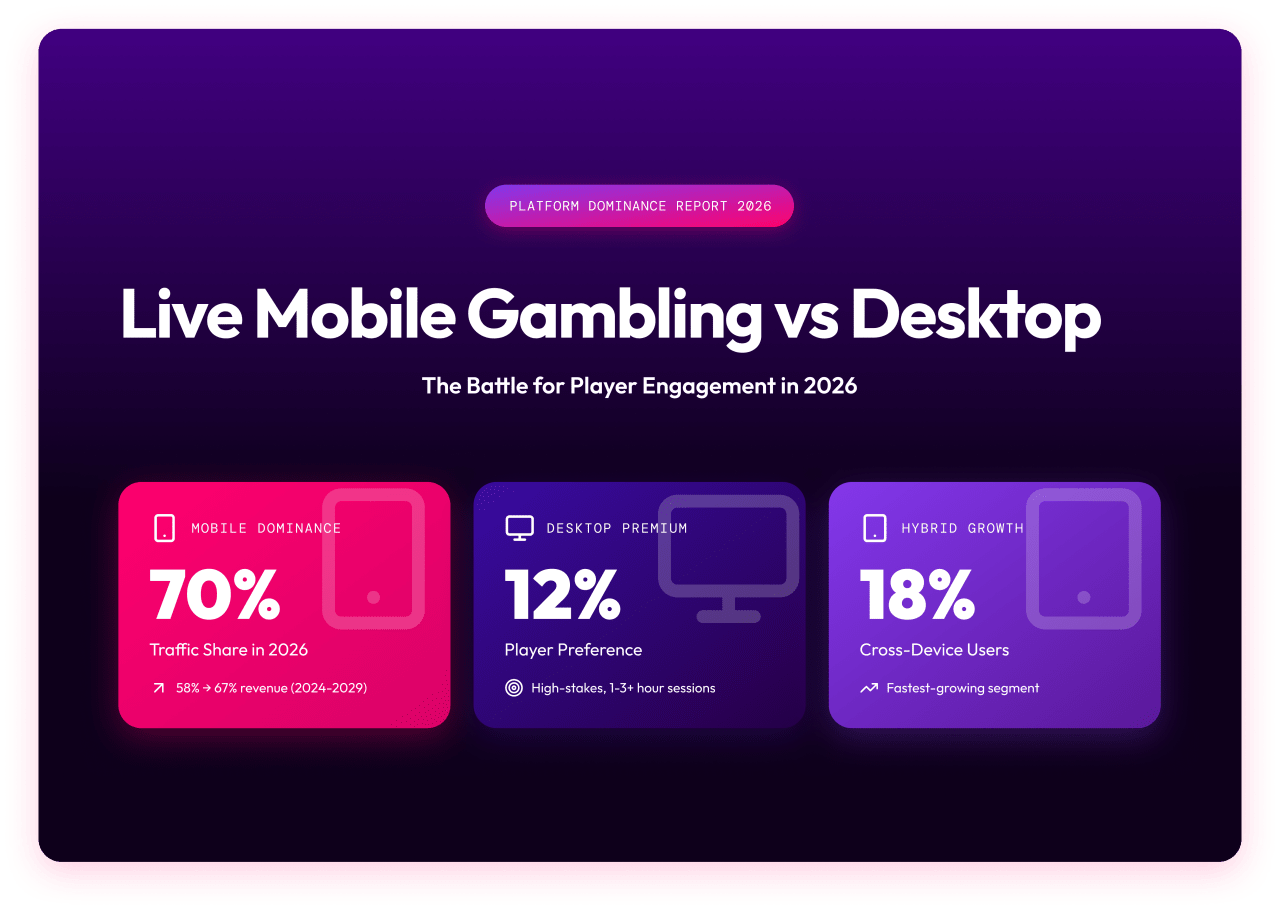
The statistics tell a clear story: mobile devices now account for over 70% of live casino traffic, vastly overshadowing desktop's modest 12% player preference. Case closed, right? Mobile wins. However, this is where it gets interesting—desktop players, despite being a small minority, tend to wager significantly more per session and often approach their games with deeper strategic intent. Therefore, when we ask which platform is "dominating" live gambling in 2026 , we may be framing the question incorrectly. The real narrative isn’t about one platform outperforming the other; it’s about how mobile and desktop have evolved to meet fundamentally different player needs and gambling contexts.
The Numbers Don't Lie: Mobile's Commanding Lead in 2026
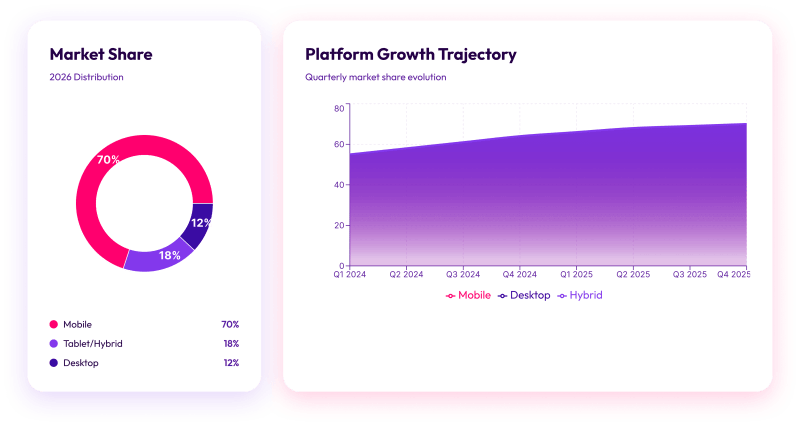
Let's start with the hard data. In the United States, approximately 70% of live online casino traffic now originates from mobile devices. The European market tells a similar story: mobile accounted for 58% of total online gambling revenue in 2024, with projections indicating this will climb to 67% by 2029. Desktop preference has plummeted to just 12% of players, while tablets occupy a niche 5% segment.
What Drove Mobile's Dominance
Several converging factors created the perfect storm for mobile's takeover:
- 5G network rollout enabling HD live dealer streaming without buffering or lag
- Smartphone penetration exceeding 85% in developed markets
- Mobile-first platform design by operators who now build for smartphones first
- Payment system integration with Apple Pay, Google Pay, and mobile crypto wallets
- HTML5 technology maturation is eliminating the need for app downloads
Live Casino on Mobile's Application
Live dealer games deserve special recognition as a standout category that demonstrated mobile devices could handle complex, real-time gambling. Industry analysts have highlighted live casino as a "standout mobile use case" because it combines HD video streaming with interactive real-money wagering. When Evolution Gaming successfully optimized its entire live dealer portfolio for mobile—including bandwidth-intensive games like Crazy Time and Monopoly Live—it proved that mobile platforms were not just adequate for live play; they were actually ideal for it.
The real-time nature of live casino games perfectly aligns with mobile's strengths: instant accessibility. Players can join a live blackjack table within seconds, play a few hands during a coffee break, and exit seamlessly. This "snackable gambling" format is much more compatible with modern lifestyles than the traditional desktop requirement of sitting at a computer.
Why Live Casinos Thrive on Mobile Devices
The technological advancements enabling mobile live casinos represent one of the most remarkable achievements in iGaming. Just five years ago, streaming a live dealer game on a smartphone often resulted in choppy video and frustrating disconnections. Today, the experience frequently matches or even surpasses desktop quality.
Adaptive bitrate streaming automatically adjusts the video quality based on the strength of the connection, smoothly transitioning between 1080p on strong WiFi and 480p on weaker cellular networks without interrupting gameplay. Additionally, cloud-based processing has shifted the computational demands to remote servers, allowing even mid-range smartphones to run graphically complex games like Lightning Roulette without performance issues.
Mobile-Specific Features That Desktop Can't Match
The best mobile live casino experiences include features that only make sense on smartphones:
- One-tap table joining that gets players into games in under three seconds
- Portrait mode optimization allowing comfortable one-handed play during commutes
- Push notifications alerting players when favorite dealers go live
- Gesture controls like swiping between tables or pinching to zoom on statistics
- Quick bet presets that remember favorite wager patterns for rapid betting
These innovations transformed mobile from a compromise platform into the preferred choice for many players. The touch-based interface proved more intuitive than mouse-based betting for casual players who found tapping chips onto a betting grid more natural than clicking and dragging.
Peak mobile casino usage occurs during lunch hours (12-2 PM), evening commutes (5-7 PM), and late night (10 PM-midnight)—times when players are away from computers but have smartphones in hand. Average mobile sessions last 5-15 minutes, perfect for filling small gaps in the day.
Desktop's Evolution – From Default to Premium Platform
Despite mobile's overwhelming traffic advantage, desktop hasn't disappeared—it's specialized. The 12% of players who prefer desktop represent a distinct demographic with specific needs that mobile can't fully satisfy.
Desktop users skew older (35-65+ age range) with the 65+ demographic showing the strongest desktop preference at approximately 17%. High-stakes players consistently choose desktop for significant wagers, valuing the larger screen and perceived stability for sessions involving thousands of dollars. Strategy-focused players—particularly those who track statistics or play games like baccarat where pattern recognition matters—find desktop's screen real estate essential.
Desktop vs Mobile: Game-Specific Advantages
Game Type | Desktop Advantage | Mobile Advantage |
|---|---|---|
Multi-hand Blackjack | View 3-5 hands simultaneously with strategy charts | Quick decisions on single hands with tap-based controls |
Baccarat | Full roadmap displays showing 50+ previous results | Fast bet placement with simplified interface |
Live Poker | Multi-tabling capability with 2-4 tables visible | Casual single-table play with social focus |
Roulette | Statistics panels and neighbor bets easily accessible | Simple inside/outside bets with quick chip placement |
This reveals an important pattern: desktop excels at complexity, while mobile excels at speed and simplicity.
The "High-Intent Platform" Concept
Desktop has evolved into what industry analysts call a "high-intent platform"—a destination players choose deliberately for focused gambling sessions:
- Screen real estate allowing multiple information panels visible simultaneously.
- Stable wired connections eliminating disconnection risks during high-stakes hands.
- Multi-tab capability for comparing odds or consulting strategy resources.
- Session comfort for 2+ hour marathon sessions that would be uncomfortable on a smartphone.
While desktop accounts for only 12% of sessions, it represents a disproportionately higher percentage of total wagering volume. Desktop players bet bigger and play longer, making them extremely valuable to operators despite their minority status.
Player Segmentation – Three Distinct Profiles
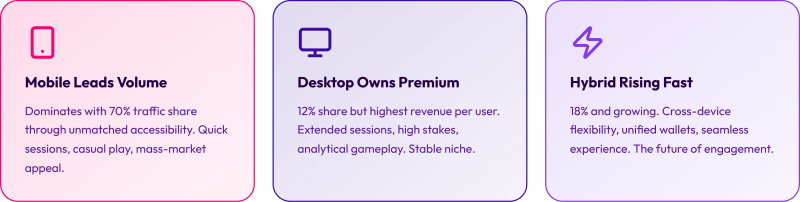
The Mobile-First Majority (≈70% of players)
This group, primarily aged 18-40, values convenience and entertainment. They typically engage in multiple short gaming sessions daily during lunch, after work, or while watching TV. Their favorite games include Lightning Roulette, Crazy Time, and casual blackjack, with sessions lasting 5-15 minutes and bets ranging from $1 to $25.
The Desktop Purist (≈12% of players)
Aged 45-65+, desktop purists approach gambling methodically, dedicating 1-3 hour sessions to classic games like blackjack and baccarat. They place higher bets, usually between $25 and $500, and view mobile gaming as insufficient for serious play.
The Hybrid Player (≈18% and growing)
Hybrid players switch between devices based on context. They might play Lightning Roulette on mobile during lunch with $5 bets and switch to desktop for baccarat with $100 bets. They prioritize gaming experiences over platform loyalty.
Operators are adapting to these behaviors with features like cloud-saved preferences and unified wallets, allowing for seamless transitions between mobile and desktop gaming.
How Providers Adapted – The Technology Behind Cross-Platform Play
Most software providers now design for mobile first and adapt to desktop second—a complete reversal from five years ago:
- Vertical layout priority with game elements stacked for portrait-mode viewing.
- Touch-target sizing where buttons are sized for thumbs rather than mouse cursors.
- Collapsible menus that maximize video feed space.
- Auto-camera switching that follows game action without requiring player input.
Conclusion: Mobile Dominates Volume, Desktop Dominates Value
So which top live casino platform is dominating live casino gambling in 2026 ? Mobile unquestionably wins in traffic volume, session frequency, and player accessibility—70%+ of all live casino activity happens on smartphones. Desktop dominates in session value, average wager size, and strategic depth.
The real answer is that the question itself is outdated. Modern live casino isn't about mobile versus desktop—it's about mobile AND desktop serving different needs within the same player's gambling journey. The casual player spinning Lightning Roulette on their phone during lunch might be the same person playing high-stakes baccarat on desktop that evening.
The future belongs to operators who recognize this reality and build seamless experiences across both platforms, allowing players to choose the right tool for each gambling moment rather than forcing them to pick a side.